
What’s Your GTM Score?
Systematizing revenue growth in startups using data

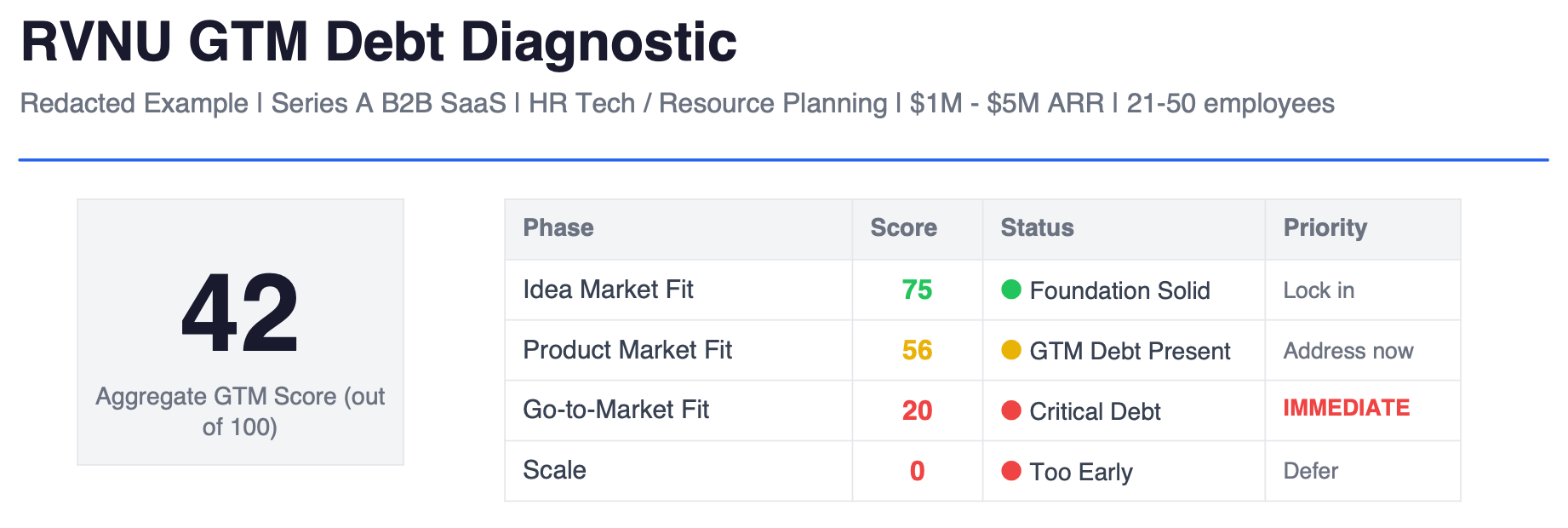
When founders start spending capital on go-to-market, they are often burning it against an ever-decreasing runway. The pressure is immense. And the advice they typically get sounds something like this: “hire a sales team, index their earnings to revenue growth, if they fail, fire them and try again.”
That attitude works (kinda) for the minority of well-funded founders on genuine rocket ships - ie: <1% of founders. For the rest, it annihilates runway, culture, energy, and in turn - their startup.
Early stage startups are chaotic, so the above advice is aligned with the craziness of this stage of growth. However, it’s also lazy and symptomatic of the lack of science we see in GTM strategy and execution across the board in startups.
In short, the advice to hire and fire in the GTM org sucks.
There has always been a better way, grounded in systems and science, and I have personally been deploying these systems grounded in science for well over a decade inside startups.
The “GTM score” is the headline output of that work, and for the first time I’ve made it publicly available.
How I Got Here
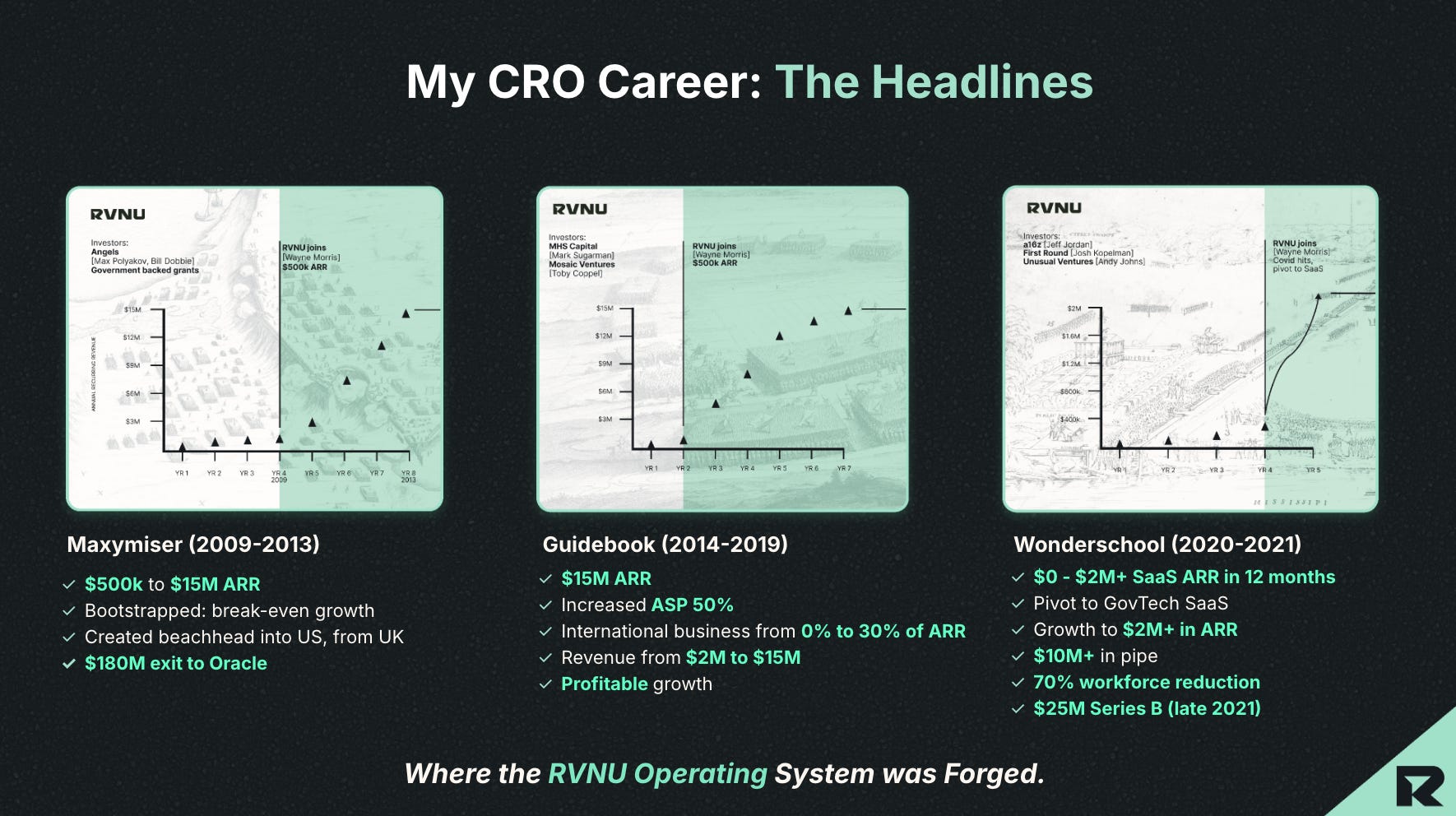
I’ve spent 25 years building revenue engines inside companies under pressure to grow fast. At Maxymiser, I built the GTM motion that led to a $180M acquisition by Oracle. At Guidebook, I inherited a team that had been hired before the playbook existed. At Wonderschool, an a16z-backed Series A EdTech startup, I was brought in as CRO to build the revenue function from scratch.
The pattern across all of them was the same. Capital gets raised. Growth targets get set. Both sides operate on a loose agreement that the next 12 to 18 months will produce a specific outcome, usually 3x ARR growth. What’s almost never diligenced with any rigor is whether the GTM foundation can actually deliver it.
Investors are great at pattern matching on things like financials, contrarian vision, education, values and skill sets. However, the consistent blindspot was and still is GTM readiness. At series A very few were asking whether the go-to-market foundation could actually support the growth that both sides had just agreed to.
Some will argue there is literally no GTM foundation at series A, and that’s the whole point of that funding round. Series A is around stage 11 in our framework (see below). There are literally 10 stages of foundation that provide signal about a startups GTM readiness before series A. Founders and investors are just not tuned into what those stages are, leading to a gap between expectations and readiness.
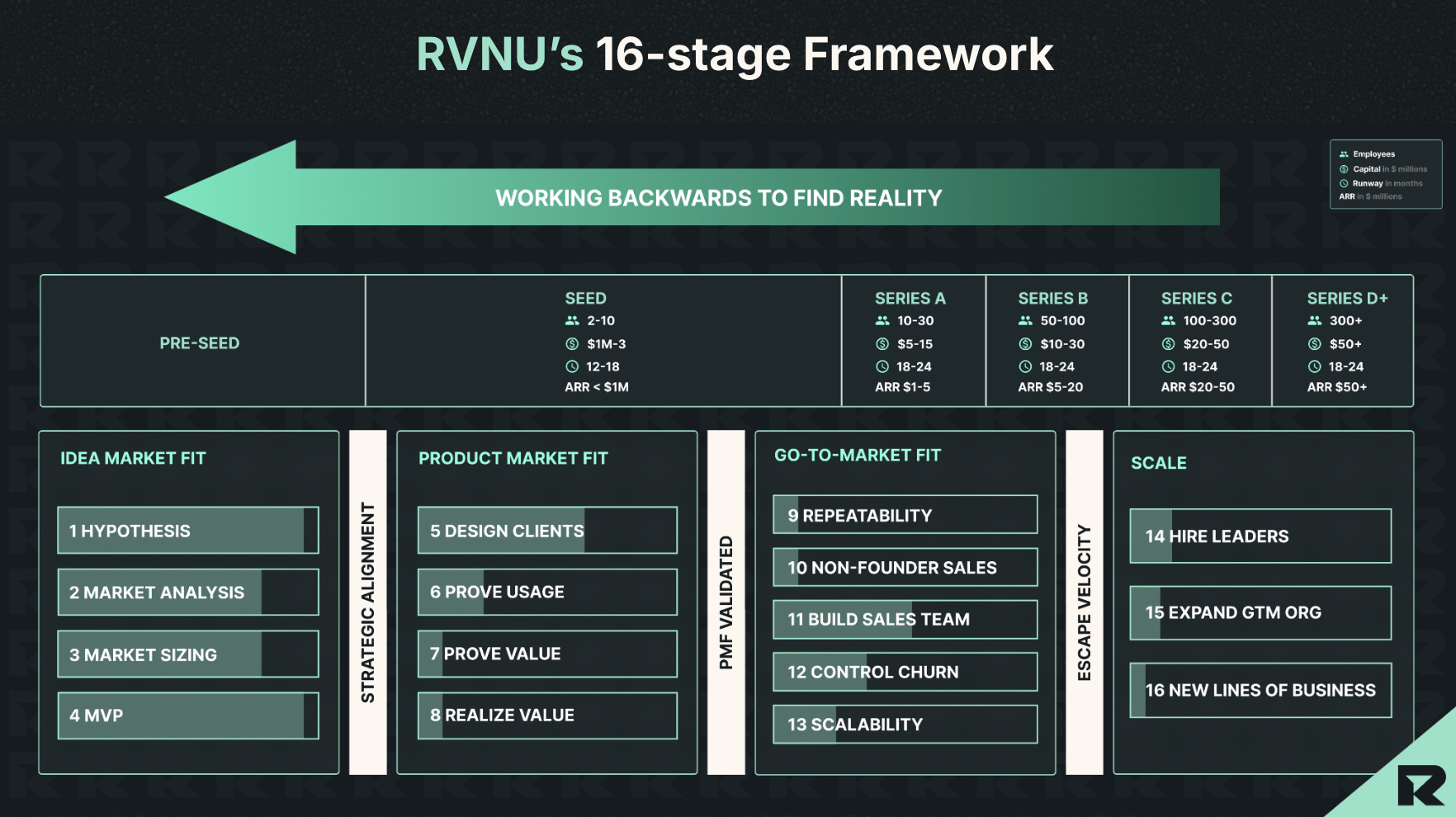
I coined the term “GTM Debt” in 2021 to describe this gap: the distance between where a founder believes they are in go-to-market maturity and where the foundation is to actually support them.
Why I Built This
Three things became clear to me over the last 25 years.
First, only a select few founders were ever going to have access to the kind of knowledge and experience I’d gained - the ones who were VC-funded and could afford to hire someone like me. That felt like an injustice, but also an opportunity.
Second, I became increasingly convinced that the diagnostic work that typically took months at significant cost could be productized and delivered in minutes at a fraction of the price. GTMscore.ai is a manifestation of that.
Third, I was also convinced that founders themselves could do much of the foundational GTM work that they think they need to hire revenue leaders for. And it’s also optimal for them to be doing it.
The founder should be doing this work until they have truly proven repeatability and can demonstrate that people other than them can sell their product. However, during that critical window, a founder armed with the right framework and the right sequence will outperform an external hire who doesn’t have the context, the founder privileges, or the urgency. We’ve proven this out time and again with technical founders over the last 5 years in the field with our founders.
The GTM score is the culmination of these convictions. It is the first publicly available version of work that has taken multiple years to produce, and it’s freely available to every founder on the planet. It is the manifestation of RVNU’s mission: to democratize access to GTM knowledge regardless of a founder’s capital position.
What We Learned From 200+ Assessments
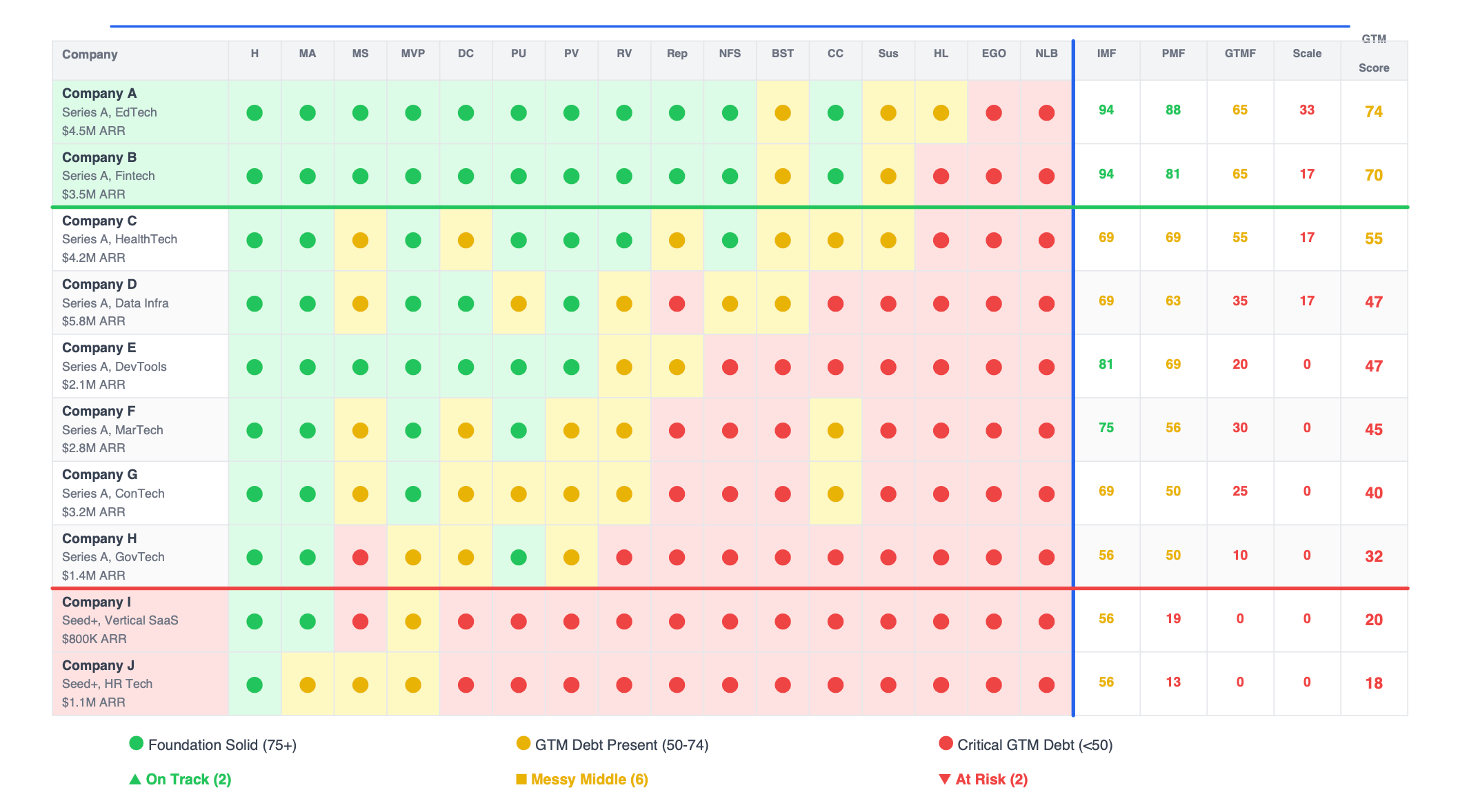
Before the “GTM score” was public, it existed as a paid diagnostic. Over 200 B2B SaaS companies went through the version 1. The V2, now live at GTMscore.ai, is faster, more precise, and importantly it is free.
The V1 dataset gave us empirical proof of the patterns I’d been seeing for years. If you’re a founder reading this, you’ll probably recognize yourself in at least one of them.
Founders skip ahead. 91% of companies who self-identified as operating in Go-to-Market Fit stages had a product market fit score below 75. They were hiring sales teams and investing in demand generation on top of a foundation that hadn’t been validated. Every one of them received pointed guidance on where to go back and close the gaps before scaling.
The transition from founder-led sales breaks. In the $1M to $5M ARR band, 68% scored below 50 on Non-Founder Sales. They hadn’t proven that anyone other than the founder could close deals repeatably. Yet 35% of those same companies were already building a sales team. They skipped the step. The cost showed up as missed quotas, rep churn, and a founder pulled back into every deal. The guidance was always the same: go back, prove the motion works without you in the room, then hire.
PMF is thinner than it looks. Only 8% of companies passed Design Clients, 23 to 24% passed the middle PMF pillars (Prove Usage and Prove Value), and just 11% passed Realize Value. Founders felt close to PMF because they had paying customers, however the middle of the phase was hollow. The score made that visible, and the guidance gave them a path to close it.
We published a full guide on how to read your GTM score by stage of growth. If you want to understand what a healthy score looks like at your ARR and capital stage, start here: Your GTM Score: A Founder’s Guide
Why It Matters
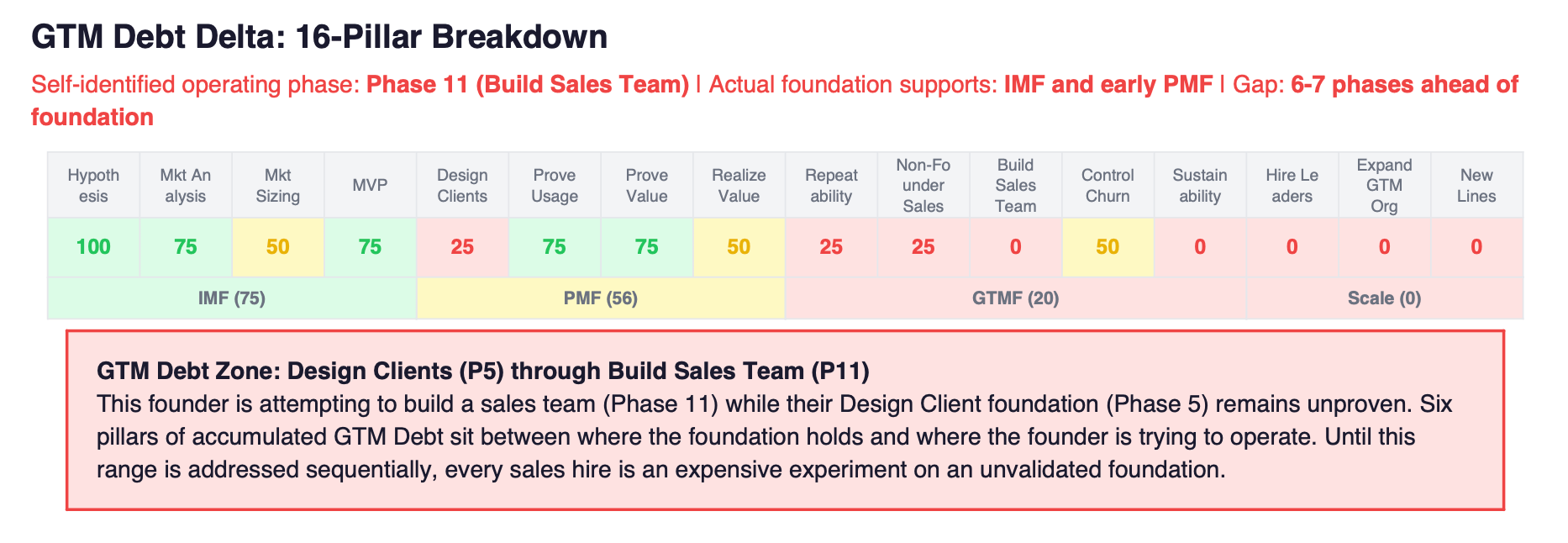
The GTM score is an alignment tool benchmarked against a GTM gold standard, built on our years working in fast growth startups. It’s a diagnostic that aligns founders, investors, and revenue leaders around an objective read of where the foundation actually stands. It fills the GTM readiness blindspot with objective data.
The score tells you whether the growth you’re planning is achievable with the foundation you have today. The phase scores tell you the shape of that foundation. The narrative output tells you what to fix first, and in what order.
The sequencing is really important. There are always fires to tend to at a startup, but based on first principles, the question one must be confident answering is: “what is the optimal order in which to tend to the fires, indexed to rapid and repeatable revenue growth?”
If you can’t answer that question, you’re going to burn time and money needlessly.
Take the assessment at GTMscore.ai. It takes five minutes.
We got you 👊🏼
Wayne
Founder & CEO, RVNU LLC